The First Light
Piazza San Marco, usually overflowing with tourists and pigeons vying for crumbs, was eerily empty. The piazza’s grandeur felt intimate, almost sacred. I wandered slowly, my shoes echoing lightly against the stone, taking in the architecture without interruption. A single seagull circled above, occasionally landing on the edge of a fountain as if sharing the moment with me. Venice, I realized, is not truly quiet until the world sleeps or rises too early to see it.
Alleyways and Hidden Corners
I left the main square and slipped into quiet alleyways, where the usual throng of tourists is replaced by soft morning light filtering through narrow passages. Doors creaked as locals began their day; a baker rolled fresh dough, the scent drifting through the stone streets. I stopped to watch, savoring the contrast: the city that feels chaotic by day is gentle and human before the sun fully rises.
Bridges spanned still waters, their reflections perfect in the calm. I paused on one, listening to the subtle sounds of gondoliers preparing for the day, boats starting to glide softly along the canals. The air smelled of salt and wood smoke, a combination both foreign and comforting.
Canal Reflections
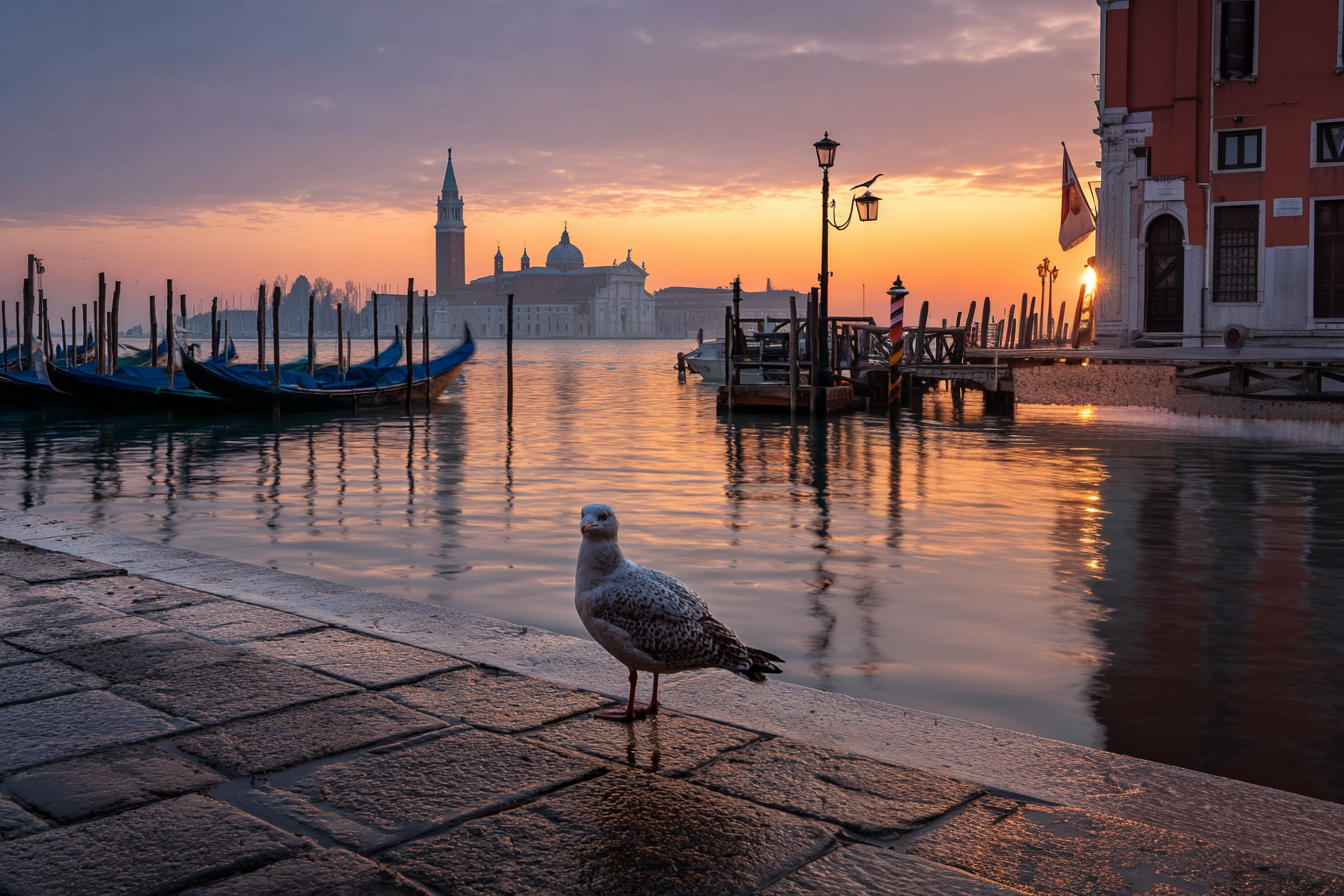
I wandered to the Grand Canal, which at sunrise seemed almost otherworldly. Water taxis had yet to arrive; gondolas floated silently, their polished wood catching the first rays of light. The buildings lining the canal—pastel-colored, weathered, and beautiful—were reflected in perfect symmetry. I stopped frequently, raising my camera but more often just lowering it again, wanting to hold the moment in memory rather than a photo.
A lone seagull perched on a mooring post, occasionally dipping into the water. It seemed to watch me as much as I watched it. Venice, usually bustling and performative, felt like a private gallery curated just for me that morning.
Cafés and Quiet Rituals
By 6:30 a.m., a few cafés began to stir. I ducked into one for a cappuccino and a fresh cornetto. The barista greeted me with a nod, no questions, no rush. Sitting by a window, I watched the first locals start their deliveries, the soft clinking of carts and footsteps blending with the faint hum of Venice waking up. It was a quiet ritual I would have missed entirely had I followed a typical itinerary.
Even as the sun rose higher, the city maintained a soft, intimate rhythm. Venice at sunrise isn’t just beautiful—it’s human, alive, and tender in a way that the daytime crowds obscure.
Practical Tips for Experiencing Venice at Sunrise
Wake up early. Anywhere between 5:00 and 6:30 a.m. is perfect for empty streets.
Stay central. A hotel near Piazza San Marco or the Rialto allows you to step out quickly before the crowds arrive.
Bring comfortable shoes. Cobblestones can be slippery in the morning dew.
Take your time. Don’t rush from one landmark to the next; the beauty is in wandering.
Enjoy the cafés. Early morning pastries and coffee with few people around feel like a secret slice of Venice.
Venice at sunrise is a gift. For a short window each day, the city sheds its tourist mask and becomes intimate, quiet, and reflective. Walking the streets alone, sharing a glance with a seagull, listening to the first sounds of the city waking—these are moments that no guidebook can capture.
By the time I returned to my hotel, Venice had begun to bustle with tourists again. The magic of the sunrise, however, remained in my memory: a city shared, if only for a moment, with a single seagull and myself. It was a reminder that even in the most crowded destinations, there are pockets of solitude and wonder—if you’re willing to wake up early enough to find them.