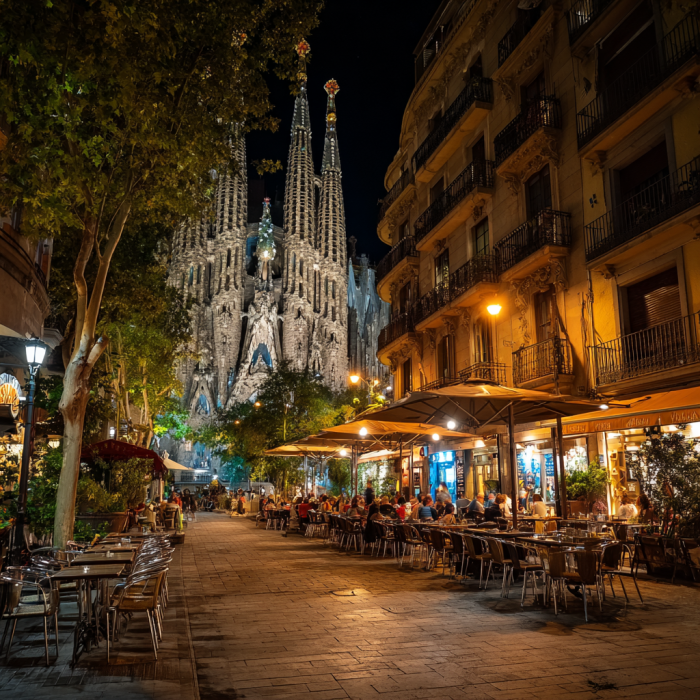
I arrived in Barcelona late on a Tuesday. My hostel was tucked away in El Raval, a neighborhood that’s neither glamorous nor touristy, but undeniably alive. The streets smelled of espresso, grilled food, and the faint tang of the sea carried on the night breeze. As a solo traveler who prefers wandering without a map, I was determined to see the city as the locals do. My first rule: forget Sagrada. At least for tonight.
The Streets Where the City Breathes
I started my walk in Poble Sec, a neighborhood perched just at the base of Montjuïc hill. Most tourists never venture here—they’re busy taking photos of fountains or hitting the cable cars. But locals know that Poble Sec comes alive after sundown. The narrow streets twist like a labyrinth, lined with tapas bars whose neon signs flicker like tiny beacons.
The first place I stumbled upon was a tiny vermuteria—a bar specializing in vermouth, a fortified wine that locals sip before dinner. Inside, a group of elderly men played cards while sipping from small glasses, chatting animatedly in Catalan. I took a stool at the corner, ordered a vermouth, and immediately felt like I had stepped into another world. There were no English menus, no rush, just the gentle rhythm of a neighborhood that knows its own pace.
A couple of streets over, I found a restaurant where the kitchen was practically open to the street. The aroma of sizzling seafood and frying potatoes drew me in. I ordered patatas bravas and a small portion of grilled octopus. A young couple at the next table asked me if I wanted to share a local white wine. Conversation flowed despite language barriers, laughter punctuating the night. These are the moments you don’t get in a guided tour.
Hidden Bars and Rooftop Secrets
As the evening deepened, I wandered toward El Born, a district that mixes medieval charm with bohemian flair. Here, the alleyways hold secrets known only to locals. I had read about a bar called El Paraigua, famous not for cocktails but for its live jazz nights and vintage vibe. When I walked in, it was nearly empty—just a handful of people scattered across dimly lit tables. The saxophone started, and the music felt alive, unpolished, real. The bartender poured me a glass of vermouth on the rocks, and I realized I had stumbled into one of those moments that stay in your memory: a city revealing itself quietly, patiently, in layers.
Later, I discovered a rooftop terrace on Passeig del Born. It wasn’t listed in any guide, and I nearly missed the narrow stairwell leading to it. From there, the city sprawled beneath me: rooftops with laundry drying in the night breeze, soft lights from cafés, and the faint glow of streetlamps reflecting on the gothic architecture. It wasn’t the panoramic views you see in magazines; it was intimate, lived-in, and human.
Night Markets and Late-Night Snacks
Barcelona isn’t just about tapas and wine—it has an unexpected nocturnal culinary life. I followed the sound of music and chatter to the Sant Antoni market area, where small vendors and late-night cafés stay open for locals after work. Here, I found churros and hot chocolate at a stall where the owner had been running the business for decades. A group of friends laughed nearby, sharing small plates of calamari and croquettes. I joined them briefly, feeling the natural warmth of a city that embraces its night owls without tourist fanfare.
Then came one of my favorite discoveries: Bodega La Puntual, a small wine bar tucked away behind an unmarked door. The owner welcomed me with a nod, pouring a glass of house red. He shared a story of the neighborhood, the old cinemas that had closed, the cafés that had survived Franco’s regime, and the hidden gardens where children played after school. Listening to him, I realized that Barcelona’s real charm isn’t its monuments—it’s the stories embedded in every street, every table, every corner.
Walking by the Water
No Barcelona night is complete without a walk along the beach, but not the crowded Barceloneta. I headed toward Bogatell, a quieter strip where the waves hit gently against sand almost empty of tourists. Joggers, couples, and dog walkers moved along the promenade. I paused, letting the sound of the Mediterranean fill the space, and felt a calmness that’s impossible to capture from a guided itinerary.
I even met a local street musician there, playing a small guitar, his music blending with the waves. We didn’t exchange much language, just smiles and nods, but somehow it felt like the city was introducing me to its soul. The contrast between the hectic daytime streets and this serene night beach was striking.
Practical Tips for Experiencing Barcelona Like a Local
From my night wanderings, I gathered a few practical lessons for anyone looking to experience Barcelona beyond the typical tourist spots:
Walk, don’t Uber everywhere. The magic of neighborhoods like Poble Sec, El Born, or Sant Antoni is in their streets themselves. Getting lost is part of the fun.
Learn a few words of Catalan or Spanish. Even simple greetings like “Bon dia” (good morning) or “Gràcies” (thank you) go a long way.
Seek small, unmarked bars. Some of the best experiences happen in places without signs or menus in English.
Stay late. Many neighborhoods truly awaken after 9 or 10 PM. Cafés, tapas bars, and live music venues come alive when the daytime crowd has gone.
Ask locals. Whether it’s a bartender, waiter, or passerby, people are usually happy to point you toward hidden gems.
Final Thoughts
I never saw the Sagrada Família that night. I didn’t need to. By choosing streets less traveled, bars with flickering neon, and small local eateries, I experienced a side of Barcelona that guidebooks cannot capture. The city is alive after the tourists leave, and it tells its own stories—unpolished, imperfect, but unforgettable.
Walking home through the winding alleys of El Raval, I realized that these moments—sharing a wine with strangers, discovering a rooftop view, hearing live jazz in a dimly lit bar—are the moments that make travel real. Barcelona isn’t just a city of landmarks; it’s a city of lives, rhythms, and stories waiting to be discovered.
For anyone willing to step off the beaten path, forget the Sagrada, and follow the pulse of the city at night, Barcelona reveals itself in ways that postcards and top-10 lists never could.