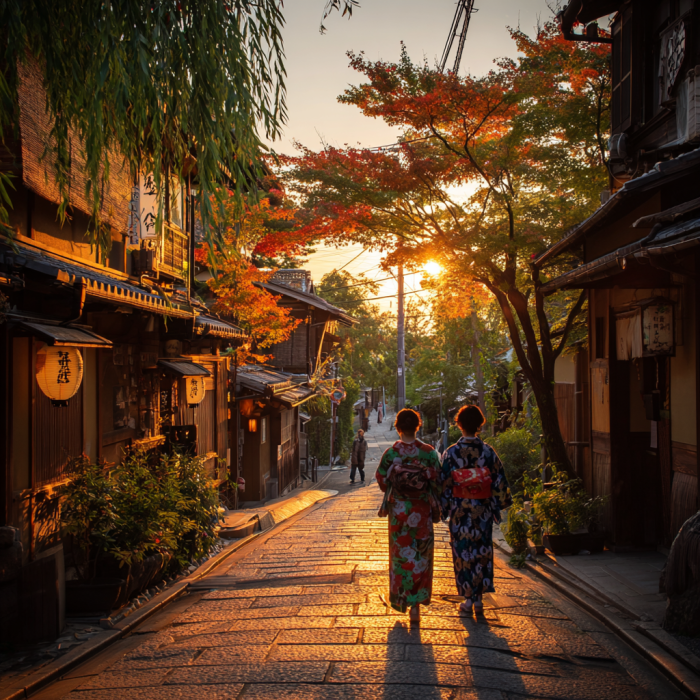
I woke up before dawn in a small ryokan near the Kamogawa River, determined to experience Kyoto as few travelers do. With a thermos of green tea and comfortable walking shoes, I stepped out into the cool, pre-dawn air. The streets were deserted, the kind of silence that makes you hyper-aware of every sound—the gentle swish of a bicycle tire on asphalt, the distant clang of a shop shutter opening, the soft rustle of trees in a morning breeze.
Streets That Whisper Stories
I wandered into the Nakagyo district, an area mostly overlooked by tourists. Here, traditional wooden machiya houses line narrow alleys, their shutters closed but hints of life visible through paper windows. Laundry hung quietly in courtyards, and cats slinked across the stone paths as if they owned the world. There were no souvenir shops, no cafés catering to Instagram feeds—only the subtle hum of a city waking up.
A small bakery opened just as I passed. The aroma of freshly baked bread mingled with the faint scent of incense from a nearby shrine. I stopped, bought a sweet roll, and watched an elderly couple quietly sweep the entrance to their home, chatting softly in Kansai dialect. It was a small, almost mundane moment, but it felt intimate, like peering into the city’s heart.
Markets and Morning Rituals
Continuing my walk, I stumbled upon a neighborhood market just opening its stalls. Vendors were arranging vegetables, fish, and handmade tofu. The chatter of neighbors buying their daily ingredients gave the street a gentle rhythm. I struck up a conversation with one vendor, a middle-aged woman selling persimmons. She gestured for me to try one, and I took a bite—the sweet, slightly tart flavor exploded in my mouth. It was far better than anything I’d tasted packaged in a tourist area.
Here, Kyoto felt less like a city of sights and more like a city of habits, rituals, and flavors. Each interaction, however small, was grounded in authenticity. Unlike the crowded temples where schedules dictate movement, this morning stroll allowed time to slow down.
Hidden Gardens and Quiet Temples
Even in a non-touristy area, Kyoto offers pockets of calm and greenery. I discovered a small temple tucked behind a row of houses. The gate was modest, almost hidden, and the moss-covered stone steps led to a tiny courtyard. A single monk was sweeping leaves, his movements deliberate and meditative. I bowed respectfully and stayed at the edge of the courtyard, absorbing the serenity without disrupting the rhythm of the place.
Nearby, a private garden peeked from behind a low wall. Plum trees were beginning to bloom, and a small koi pond reflected the soft light of morning. No guidebook mentioned this spot. No crowds came to disturb the stillness. For a few quiet minutes, Kyoto existed only for me.
Practical Tips for Early Morning Kyoto Walks
From my morning explorations, I gathered some insights that help make early walks in Kyoto magical:
Wake up early. Between 5:30 and 7:30 AM is the best window to experience the city before it fills with tourists.
Stick to residential areas. Nakagyo, Kamigyo, and smaller alleys in Higashiyama are full of charm and life without crowds.
Walk slowly and observe. Kyoto is less about rushing to a landmark and more about noticing subtle details: lanterns, signage, sounds, smells.
Respect local life. Avoid stepping into private spaces and keep your voice low. Smiles and bows go a long way.
Bring a camera—but sparingly. Some moments are best absorbed, not photographed.
Coffee, Tea, and Morning Reflections
After a couple of hours wandering, I found a tiny café that had just started brewing pour-over coffee. The owner greeted me warmly, asking where I was from. I sat by a low window, sipping the dark, rich coffee while the city slowly stirred outside. Joggers ran past, a delivery truck rumbled along a narrow street, and a temple bell rang faintly in the distance.
It was in that moment I realized why these early morning walks are worth the effort. Kyoto in daylight is beautiful, but it is also curated, busy, and performative. Kyoto before dawn is lived-in, human, and real. The city tells stories not of architecture or history alone, but of the people who inhabit it, the small routines they cherish, and the quiet poetry of everyday life.
If you visit Kyoto only to check temples off a list, you’ll miss half the city. The hidden alleys, early morning markets, mossy courtyards, and gentle sounds of life create an experience far richer than any selfie in front of a pagoda.
So set your alarm, leave your guidebook in the drawer, and step into the quiet streets while the city sleeps—or, more accurately, while it wakes slowly. Kyoto’s soul is found not just in what is seen, but in what is quietly lived. And if you are willing to wander, you may discover a side of the city that will stay with you long after you leave.