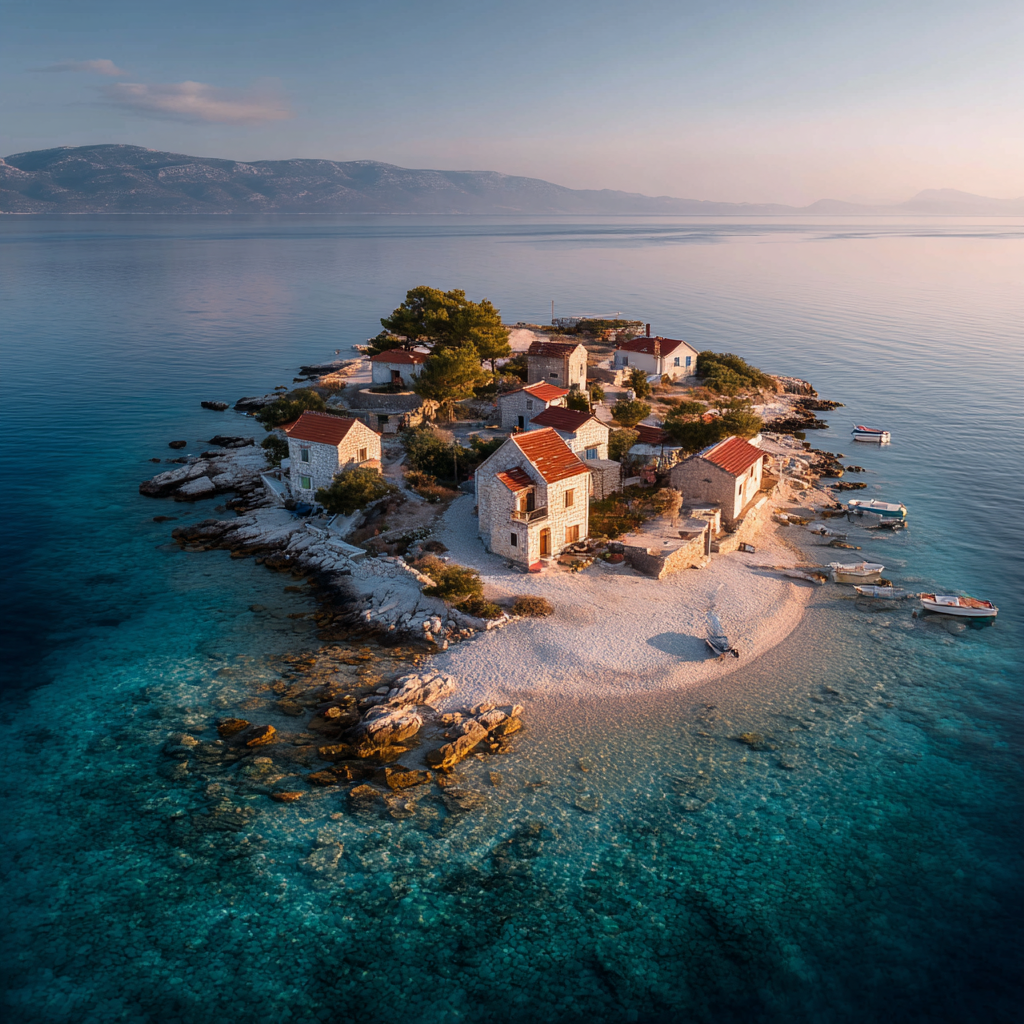
I first heard about this tiny island through a friend of a friend, a local sailor who swore that those seeking tranquility should skip the famous stops. There’s no large port, no flashy hotels, no cruise ships disgorging hordes of selfie-stick-wielding tourists. Instead, you arrive to a single pier, a handful of stone houses, and the scent of pine and sea salt mixing in the warm summer breeze.
Arrival and First Impressions
I arrived on a small wooden ferry, the kind that rocks gently with every wave and barely holds a dozen passengers. The island unfolded slowly as we approached: a crescent of pebbled beach, terraced olive groves, and a village of whitewashed houses with terracotta roofs. There were no taxis waiting, no organized tours. The silence was almost shocking, broken only by the distant bark of a dog or the occasional clang of a boat bell.
Stepping onto the pier, I felt a rare sense of arrival—like discovering a hidden corner of the world before anyone else. A small café by the waterfront offered strong black coffee and homemade pastries. The owner greeted me as if I had been expected, and I realized this island thrives not on tourism, but on slow, daily rhythms and genuine human connection.
Wandering Through Life, Not Landmarks
The beauty of this island is not in famous monuments—it’s in life as it’s actually lived. Narrow stone alleys wind between houses, laundry hangs in the sun, and cats doze lazily on low walls. There are no guidebook signs pointing to “must-see” vistas; every corner feels like a personal discovery.
I wandered to the island’s small church, its bell ringing softly in the afternoon sun. Inside, a few elderly locals were quietly praying, their faces serene, unbothered by the outsider wandering through. I sat on a bench outside, looking over the sea, and watched fishermen mend their nets. The rhythm was gentle, human, and unhurried—everything missing from the busier, more famous Croatian islands.
Hidden Beaches and Crystal Waters
After exploring the village, I found a narrow path leading to a small cove. The beach was made of smooth stones and soft sand, backed by jagged cliffs and pine trees. I was the only one there. The water was impossibly clear, shades of turquoise and sapphire that shift as the sun moves across the sky. I swam for hours, feeling the gentle current and the warmth of the sun, completely disconnected from the world I had left behind.
Unlike the crowded beaches of Hvar or Brač, this little island offers intimacy and solitude. Here, you can float in silence, watch a single fishing boat glide across the horizon, and hear only the whisper of the waves.
Meeting the Locals
The most memorable part of the visit was meeting the locals. In the late afternoon, I joined a family-run konoba (tavern) for dinner. The menu was simple: grilled fish, fresh vegetables, and homemade wine. The woman serving me laughed when I struggled with Croatian words, and the children ran around the courtyard, their energy contagious. Conversation was slow and easy, punctuated by laughter and shared stories.
I learned that the island’s population has dwindled over the years. Young people leave for the mainland, while the elders stay behind, maintaining traditions that have persisted for generations. Eating dinner here felt like stepping back in time—sharing a meal not designed for tourists, but for community, for sustenance, and for connection.
Practical Tips for Visiting
Travel by small ferry or private boat. Larger ferries don’t reach this island, which is part of its charm.
Bring cash and basic supplies. Shops are limited, and many places don’t accept cards.
Respect local life. Avoid loud behavior and don’t expect tourist services.
Plan for slow travel. There’s no rush here—the island is meant to be savored.
Stay overnight if possible. A few small guesthouses and B&Bs offer the full experience of island life.
Why This Island Matters
In a world where travel often feels performative—about ticking boxes, photographing landmarks, and posting to social media—this tiny Croatian island is a reminder of why we explore in the first place. It’s not about popularity or convenience; it’s about discovery, presence, and genuine experiences.
I left the island reluctantly as the sun set, the sky streaked with pink and orange hues reflecting on the calm Adriatic. The ferry ride back to the mainland was quiet, each of us absorbed in our thoughts. I carried with me the memory of the soft lapping of the waves, the warm laughter of locals, and the clarity that comes from being somewhere truly unspoiled.
For travelers who want more than the obvious, who seek the quiet corners of the world, this forgotten Croatian island offers a rare gift: an untouched, authentic experience that lingers long after the trip ends.